The Retention Loop: Why Your Best Customers Are the Ones You Already Have
The Real Problem Isn’t What You Think
Many businesses believe that the issue they face is a lack of traffic; therefore, they believe that since no one is seeing their advertisements, and as such, customers are not coming through in these instances, and continue to use rational behaviour by spending money to get more exposure. Initially, this approach helps to bring sales in; however, eventually, the growth stops, and here comes the moment when you have to go after the next buyer once again, causing a lot of stress. The reality, though, is different, as this is not a problem of traffic. This is a problem of customer retention.
The Customers You’re Overlooking
Consider the way you usually operate. If you found an item that you really like and can trust, then you simply keep buying it without looking around. Why? The answer is simple: it is ideal for you, and the same process takes place among your buyers.
The thing is, the minute someone purchases from you, he/she has already taken one of the hardest decisions – they trusted you with their money, but instead of finding ways of keeping that person, most businesses try to focus on finding their next customer.
What Happens After the First Sale
Here’s what usually happens. A customer buys something, and they get a confirmation email. Maybe a shipping update and then… silence. No real follow-up. No effort to stay in touch. No reason for them to think about you again. So naturally, they move on, not because they didn’t like your product. But because nothing pulled them back.
This is where most revenue quietly slips away — not in the first sale, but in everything that comes after it.
The Retention Loop (In Simple Terms)
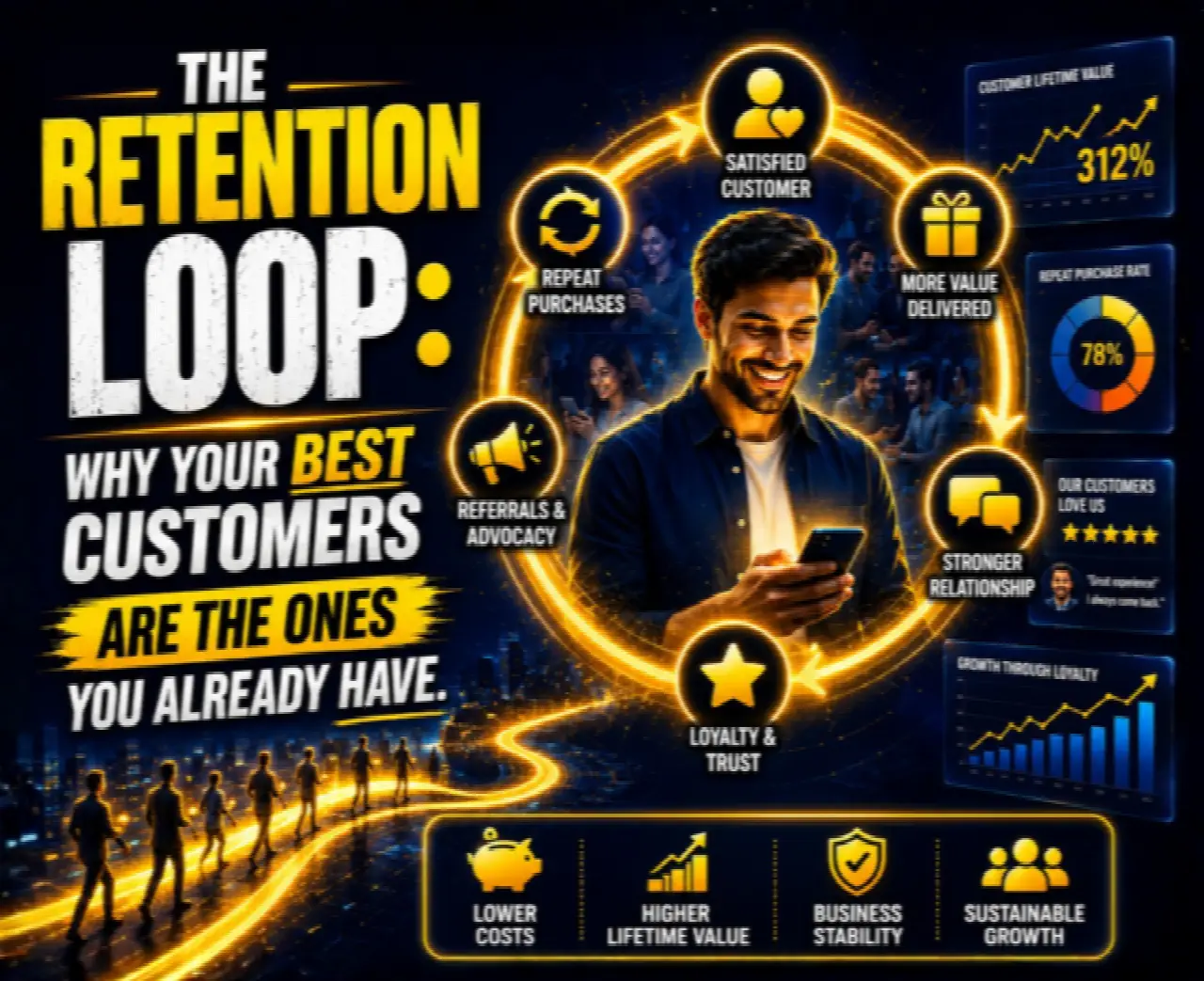
The retention loop isn’t complicated. Someone buys → they have an experience → you stay connected → they come back → repeat, and that’s it, but most businesses break this loop right after the first step. They focus so much on getting the sale that they forget what happens next, and that’s exactly where the real growth lives.
Why Email Still Matters More Than You Think
With all the noise around social media and ads, email feels almost… old, but it works for one simple reason: it’s direct. You’re not fighting an algorithm. You’re not hoping someone sees your post. You’re showing up in a space people check every day. The problem isn’t the channel. It’s how it’s used.
Most emails feel like ads. Loud, pushy, and easy to ignore, but when done right, email doesn’t feel like marketing at all. It feels like a conversation.
The Difference Between Noise and Connection
Open your inbox and scroll for a second. You’ll see things “Limited time offer.” “Last chance.” “Don’t miss out.” It’s all urgency and pressure, and after a point, you stop paying attention.
Now imagine getting an email that feels different. It doesn’t rush you. It doesn’t demand anything. It just checks in, shares something useful, or says something that actually feels real. You notice it not because it’s louder but because it’s human, and that’s what most brands miss.
The Moment That Defines Everything
Immediately following purchase, they have their highest level of attention, focused on your offering. They're interested and intrigued by it, but that lasts for only a moment.
The moment will be wasted if you let it, but harnessed correctly, it will set the stage for all subsequent interactions. Even an email with a simple note thanking them for their purchase, helping them out, or simply addressing them in a manner appropriate to their interests and desires, can make a monumental difference since now the process isn't over at check-out.
Building Something Beyond the Transaction
People don’t come back just because a product worked. They come back because the experience felt easy. After all, the brand stayed familiar because it didn’t disappear the moment money changed hands.
No complex strategy needed, sometimes all it takes is engaging in regular communication in a manner that seems natural, sending them something valuable, and reminding them of why you won them over in the first place. Over time, what results is an emotional relationship far greater than anything you could generate from sales alone. When all you do is reach out for a sale, each attempt looks like an attempt at persuasion, but once a pattern of consistent interaction.
When Selling Stops Feeling Like Selling
Here’s where things start to shift. If the only time you show up is when you want to sell, every message feels like a transaction, but if you’ve been present consistently, the next offer doesn’t feel forced. It feels relevant, and it feels like a natural next step, not a sudden push, and that changes how people respond because now, they’re not being convinced. They’re continuing a relationship they already trust.
The Compounding Effect of Retention
This is the part most people underestimate, i.e., Retention - it builds on itself. One good experience leads to another. That leads to familiarity. That leads to trust, and trust reduces friction. The next time the customer needs something, they don’t start from scratch. They come back to you not because they were persuaded again but because it’s easier and over time, that ease turns into predictable, repeat revenue.
Why This Matters More Than Acquisition
Acquiring new customers will always be important, but relying only on acquisition is expensive. You’re constantly spending just to maintain momentum, and retention changes that equation. When customers come back on their own, your cost per sale drops. Your revenue stabilizes. Your business becomes less dependent on constant effort, and you’re no longer chasing growth. You’re building it.
A Simple Shift That Changes Everything
Instead of asking, “How do we get more customers?” Start asking, “What happens after someone buys from us?” That one question forces you to look at the part of the journey most businesses ignore, and once you start improving that, everything else becomes easier.
The Takeaway
Your best customers aren’t strangers who haven’t discovered you yet. They’re the ones who already trusted you once, and they’re the ones who are most likely to come back — if you give them a reason to, and that reason doesn’t have to be a discount or a campaign.
Sometimes, it’s just staying present. Staying relevant and making sure the relationship doesn’t end after the first sale, because when you get that right, growth stops feeling like a constant chase and starts feeling like something that builds, quietly and consistently, in the background.
Written by
Simer Ghuman
Webcooks Team
Keep reading