
Stop Using Stock Photos: Why Authentic Imagery Outperforms Polished Graphics
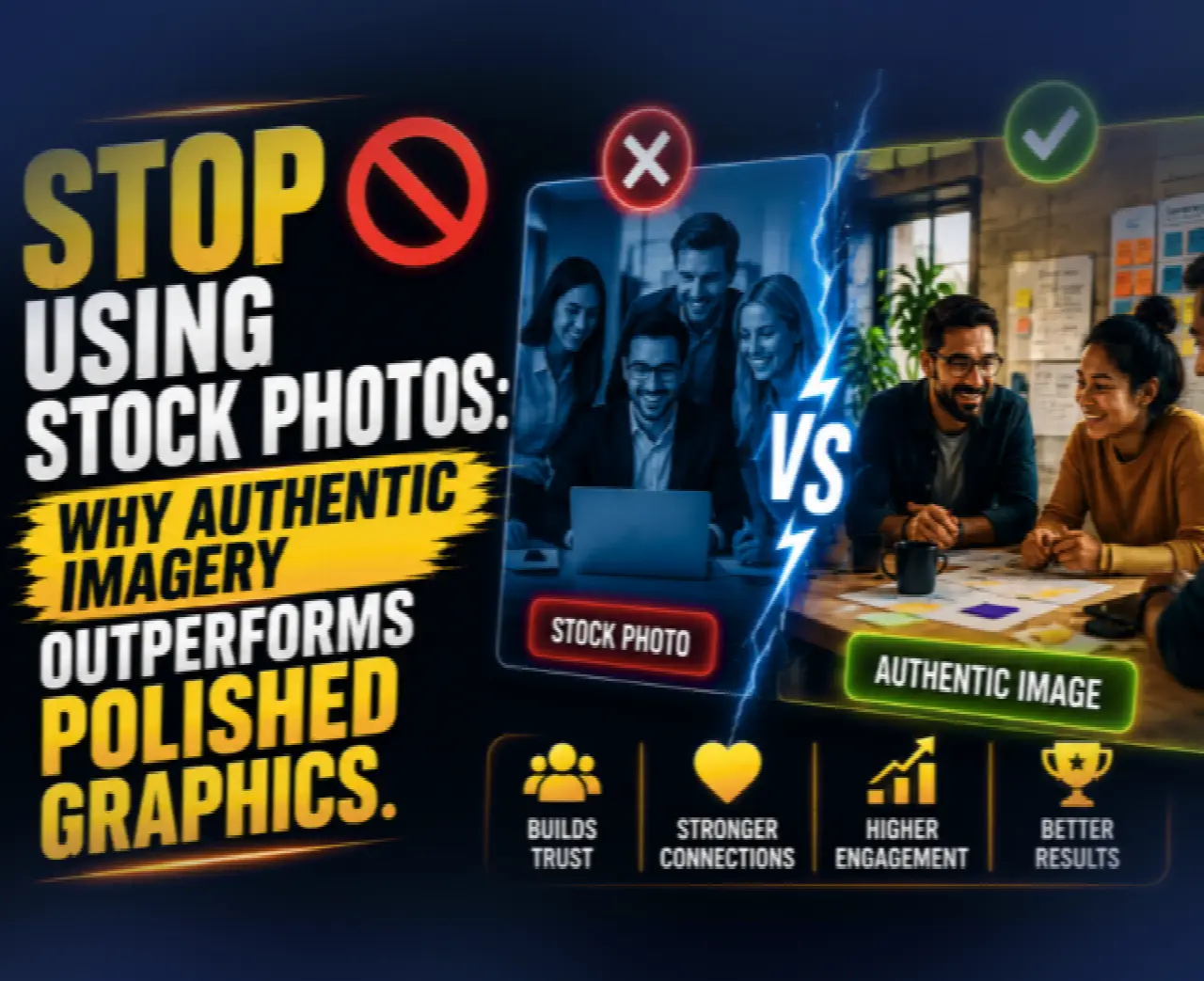
The Internet Has Become Too Perfect
Scroll through enough business websites and you start noticing the same thing everywhere — the same smiling office workers, the same perfect desks, the same handshake photos, and the same unrealistically happy teams staring at laptops. At some point, everything begins to look identical. Ironically, the visuals that were once considered “professional” are now the very thing making brands feel generic and forgettable.
For years, businesses believed polished stock photography was the safest way to build credibility online. If the images looked clean, expensive, and perfectly edited, customers would automatically trust the brand more. But consumer behavior has changed dramatically. Today’s audiences are exposed to thousands of advertisements and marketing visuals every single day. People have developed an instinct for spotting what feels staged and what feels real. And the truth is, most stock photos no longer feel authentic.
Why Generic Stock Photos No Longer Work
The biggest problem with stock photography is not that it looks bad — it is that it feels emotionally empty. Users have seen the same style of images so many times that they instantly recognize them as marketing material. The smiling “business team” in a conference room, the fake customer support representative with a headset, or the perfectly lit office environment no longer builds confidence. Instead, it creates distance.
When visitors land on a website, they subconsciously ask themselves one question within seconds: “Can I trust this business?” Generic imagery often fails to answer that question because it doesn’t provide proof. It looks artificial, overly polished, and disconnected from reality. Instead of making a brand look credible, it often makes it look interchangeable with hundreds of others online.
Authentic Photos Build Trust Faster
This is where authentic imagery changes everything. Real photos of your team, office, products, or work process immediately create a sense of honesty. They show visitors that there are actual people behind the brand. Even simple smartphone photos can create stronger emotional trust than expensive stock visuals because they feel believable.
Authentic imagery removes the invisible barrier many polished websites create. Visitors no longer feel like they are looking at a carefully manufactured advertisement. Instead, they feel like they are interacting with a real business operated by real humans. That emotional reassurance is incredibly powerful because trust is one of the biggest factors behind online conversions.
People do not buy from logos or graphics. They buy from people they feel comfortable with.
Why “Imperfect” Images Often Perform Better
One of the most surprising things businesses discover during marketing tests is that slightly imperfect photos often outperform professionally staged ones. Images with natural lighting, casual clothing, real workspaces, and candid expressions tend to generate more engagement because imperfections signal authenticity.
Perfect imagery can sometimes feel too polished to trust. Audiences are used to advertisements looking flawless, so when something appears overly edited, their brains automatically categorize it as marketing. Real images feel different. They feel spontaneous, honest, and emotionally relatable.
This does not mean businesses should intentionally create poor-quality visuals. The goal is not to look messy or careless. The goal is to look human.
Understanding front-end performance can also help in optimizing these authentic visuals.
Social Media Changed Consumer Expectations
The rise of social media completely transformed how people interact with content online. Platforms like Instagram, TikTok, YouTube, and LinkedIn normalized raw and behind-the-scenes content. Audiences became more interested in authenticity than perfection.
Today, people spend hours watching creators film videos from their bedrooms, founders sharing casual business updates, and brands posting unfiltered content from their daily operations. This shift changed what consumers expect from businesses everywhere, including websites.
Modern audiences are no longer impressed by perfect branding alone. They want transparency. They want personality. They want to feel a connection with the people behind the business. That is why casual videos often outperform commercials and user-generated content frequently converts better than polished campaigns.
Authenticity has become more valuable than perfection because authenticity feels rare.
Real Photos Create Emotional Connection
Humans naturally connect with things that feel familiar and relatable. A real team photo instantly communicates warmth and accessibility in a way stock images cannot. Visitors can imagine themselves working with your business because the environment feels real rather than staged.
This emotional connection matters more than many companies realize. Most buying decisions are influenced by emotion first and logic second. If your website feels trustworthy, approachable, and human, users are far more likely to stay longer, explore further, and eventually convert.
Authentic visuals also make brands more memorable. Generic stock photography tends to blend into the background because users have seen it repeatedly. Real imagery, however, creates uniqueness because it belongs specifically to your brand. No competitor can copy your people, your culture, or your story.
Authenticity Works Across Every Industry
The power of authentic imagery is not limited to one type of business. Almost every industry benefits from showing reality instead of polished perfection.
For SaaS companies, real screenshots, founder photos, and behind-the-scenes product development create trust faster than abstract illustrations. Service businesses and agencies build credibility when they show their actual team and workspace rather than relying on generic office imagery.
eCommerce brands benefit from realistic product photography because customers want to know exactly what they are buying. Local businesses such as cafes, salons, gyms, and restaurants create familiarity when they show real interiors, staff members, and customer experiences.
People want proof before they commit to a purchase or service. Authentic visuals provide that proof naturally.
This principle is a cornerstone of modern Digital Marketing strategies.
The Rise of AI Makes Authenticity More Valuable
As AI-generated content becomes more common, authenticity is becoming even more important. Today, almost anyone can create polished graphics, hyper-realistic visuals, and professional-looking designs within minutes. Because of this, audiences are becoming increasingly skeptical of content that looks “too perfect.”
In the future, real photos may become one of the strongest trust signals a brand can have. Authentic imagery acts as evidence that the business actually exists and that real humans are behind it. While AI can generate beautiful visuals, it cannot replicate genuine human experience in the same way.
That is why businesses that embrace authenticity now are likely to stand out more in the years ahead.
Professional Does Not Have to Mean Artificial
Many businesses avoid using authentic imagery because they fear looking unprofessional. But professionalism and authenticity are not opposites. A website can still look modern, clean, and visually appealing while using real photos instead of generic stock graphics.
The strongest brands today understand how to balance quality with relatability. They use natural photography, genuine moments, and human-centered storytelling while maintaining strong design principles. The result feels both polished and believable.
That balance is what modern audiences respond to most.
Mastering web design allows brands to maintain this professional look without sacrificing the human touch.
Final Thoughts
The internet is filled with polished marketing visuals, and most people have learned to ignore them. Audiences are tired of staged perfection because it often feels disconnected from reality. What people truly respond to is honesty, transparency, and human connection.
That is why authentic imagery consistently outperforms generic stock photography. Real photos build trust faster, create stronger emotional connections, and help brands feel more approachable. In a digital world overflowing with artificial perfection, authenticity has become one of the most powerful competitive advantages a business can have.
So before uploading another generic stock image to your homepage, ask yourself one simple question: does this image make your business feel real?
Because the brands people trust most today are not necessarily the most polished ones.
They are the most believable.
Written by
Simer Ghuman
Webcooks Team